

Dev Log I
October 31, 2025
Now that you have a solid impression of Chaoscraft’s core design, we can proceed to discuss some of the finer details of development. For this sort of work, it’s important to note first there tend to be major logistics questions involved in making a game of this nature. You cannot magically poof it into existence. It takes a team and exceptional devotion to the craft.
It is of great value, then, to intimately dissect the pieces and focuses that comprise 1.0 development. With this in mind, it is our approach an Early Access could be made fairly easily, though a broader version of 1.0 is a taller task, as always. Note as well I am not a professional concept artist, nor web dev. The Class Web you see is an abstract prototype, to be refined in the future by a professional. Still, you can see on our website a very vivid image of Chaoscraft, and the second game we plan to publish, Castle of Nightmares.
Our 1.0 goal is to introduce:
- Play, Character, Class Web, Training, and Hardcore menu tabs
- Ten classes
- Three Arena maps
- Off-season 1v1, 2v2, and 3v3 ladders
- Open world
If we meet this goal prior to 1.0 launch, we may also see:
- 5-man hardcore Labyrinths
- A lifelike hardcore raid
- TDM (5v5)
- Expanded exotic drop tables
- Expanded open world
- Highly experimental Magic Realms
- Greater character and class customization
- Betting using in-game currency
- A hardcore monthly Gladiator Games, Rogue Rumble, and Magic Tournament
- Other monthly Arena, TDM, and BR tournaments
- Open-world HC Bounty Hunter
- Lifelike non-player characters with dynamic personality and speech
- Live high-fidelity face-to-face character-player appearance
All of these development objectives are on the table. We could very easily see all of them implemented in 1.0, with sufficient resources. Having outlined Phase 1, I’ll speak further on some of its varying threads.

Play, Character, Class Web, Training, and Hardcore

Chaoscraft is a kind of fusion of multiple genres and game types. Given the ability of players to choose and shift between many characters and classes at will, it features a Main Menu like FPS games. Here, players can select from available ranked ladders, hardcore journeys, and Otherworld’s realms.
There is some deliberation that’s been made between a classic MMO login design, where you create and select a character and enter a world directly, and our current design. One of the main reasons for this current design is relative limitations on server capacity, making it a necessity to moderate how many players can enter the world at a given time. Also, some players may not feel like being required to find an available world simply to be able to queue whether solo or in a party. As an added element, there are no non-PvP realms, thus the only sanctuaries tend to be some towns and outposts as well as a handful of future cities. Given current population limits, it makes sense to ensure those who want to play in-world can do so while those who only want to queue competitive or work on customizations can also do so.
One of the most outstanding qualities of Chaoscraft is the player’s power to create any kind of character as any kind of class, and choose between characters seamlessly, creating custom interfaces for each or using a base template that transfers core UI. Players can select any character to play at any time. There are also no levels, nor any hard requirement to obtain gear to be viable in endgame, as well as gear powers being inactive in ranked versus. Therefore, if a player wants to, they can simply make a character, with any desired aesthetic and build, and enter any part of the game. While gear does exist as in any MMO – rarer pieces having their own unique traits and appearances, and a form of progression and individual story, it is not strictly necessary if one’s desire is to battle enemies and undertake adventures on a fairly balanced playing field. This contrasts sharply with traditional MMOs, where a player would typically be required to make a low-level character (subject to endless imbalances), spend long periods of time gearing, and only then be able to enjoy endgame on the same level as one’s peers. While Chaoscraft preserves some of the core traditions of fantasy MMOs, it also opens the door to a new kind of character evolution, where what matters most is your skill, determination, and knowledge, not levels or gear.
With the launch of 1.0 will come an in-game Class Web, access to Spellbooks and Skill Trees, a training module, and a sampling of hardcore.
Three Arena maps

Chaoscraft’s first competitive off-season will see a minimum of three Arena maps. In the future, we hope Arena to have ten maps.
When players join an Arena match, there is a 50% chance they will join a Named Map with the enemy team known and a 50% chance they will join a Mystery Map with the enemy team unknown. Named Maps include any of the set maps of the ladder’s circuit. Mystery Maps are randomly generated maps with unpredictable terrain and other features. This creates a possibility that, a good deal of the time, maps and teams are unknown, forcing live adaptation and heightening strategic challenge. A feature of this nature fosters, like many others, a sense of infinite novelty.
Ten classes
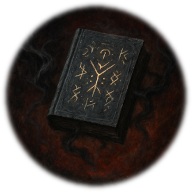
Our dream is to see ten playable classes in EA. At a minimum, we would like to see six classes. If necessary, four classes should be absolutely doable. Whatever the range is at launch, we will continue to release classes on a monthly basis until 1.0. Skill Trees are currently in a prototype state, with future plans of a universal spellbook accessible to all classes, enhancing build selection. Eventually, we would like to see a return of classic talent trees, with countless spec variations and hybrid builds.
Off-season 1v1, 2v2, and 3v3 ladders
As an initial introduction of ranked versus, the Arena division will feature both 1v1, 2v2, and 3v3 ladders. All ladders are global, though competitive regions will be relatively separate. This echoes the global rankings of modern chess, a game which allows players to play both domestically and internationally on the same leaderboard. It is our hope players will be able to choose from domestic region queues or, if so desired, inter-regional queues. There are naturally many complexities that have to be fine-tuned here, so it will take some time to work out the details.
1v1 is a beloved division that is remarkably lacking in many of today’s games, especially in the MMO sphere. We find it a little silly games often don’t offer a ranked 1v1 mode with seasonal rewards. Being able to hop into a straight-up one-on-one fight is a simple fun that doesn’t necessitate finding a group or playing with randoms.
TDM and BR are planned for the future, BR being released last. Arena will see a colorful mix of modes, comps, maps, and rewards.
Open World
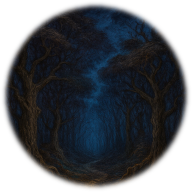
One of the most widely enjoyed appeals of an MMO is the open world, including both open-ended adventure and WPvP. Here, we see all the traditional allures of magical worlds: vast regions, towns and outposts, monsters and rares, chests and treasure, other curiosities, world bosses, and world events. It is possible Chaoscraft EA’s first world will be somewhat small, given developer resources. However, it is also possible it will be much vaster. There are several traits of Otherworld and its regions that will be seen and better grasped in the future. It is far from a standard MMO world, a truth that cannot be given much substance in words alone.
Evolution of PvP

Since the advent of massive roleplaying games over two decades ago, it has become clear a majority of players tend to orient around PvM. To some extent, PvP may be an afterthought, haphazardly thrown in for those who enjoy it. Our philosophy sees PvP and PvM as equals, two sides of the same coin to be balanced and enriched in unison.
PvP and PvM both are set to undergo their own evolution. Under this section, we’ve given some focus to PvP and what makes competitive combat and versus so special and so difficult to design well.
In short: Major MMOs with PvP have been too centered around control, or otherwise so janky or unrealistic the true essence of combat is lost. In particular, we see frequent uses of direct control like stuns, silences, roots, slows, and a number of other abilities meant to deny free movement. In effect, this creates a meta in which the game is about rendering one or more enemies incapacitated, making the match e.g. 2v1, 3v2, etc.
This is a somewhat outdated model. It has its vintage allure like anything else, and will always have a place in history. However, for MMO PvP to reach anything on the level of realism-based combat, it takes a greater focus on specific skill elements, namely those such as skillshot, movement, tactics, avoidance, anticipation, sense, coordination, and raw torque. To use a single ability and effectively render a character unplayable is rather anticlimactic and even somewhat cheesy, to say the least. Not to mention the presence of other issues in the meta like excessive defensive abilities, mind-numbing resource attrition, and absurdly long drawn-out matches. All of this comprises a game that just lacks that special spice and spirit so characteristic of a skillshot-based rated M title.
Battles based strongly in precision, direct damage, and strategy, in a fast-paced no-frills atmosphere, is a theme worth giving deep thought. When we use the term fantasy realism, we mean a realm of magic that mirrors the same basic elements of the real world. Beyond this fundamental foundation, it goes without saying it isn’t particularly enjoyable at all to be repeatedly rendered immobile and inactive in what is supposed to be a real fight, nor is it enjoyable to some, including myself, to do this to opponents.
Chaoscraft’s PvP is not for the faint of heart. It is tough, gritty, and bloody, and it may be exceptionally difficult to establish a set meta, so diverse and full of potential the varying classes are. Where this direction goes, and what it’s destined to become, is a future we ourselves can’t foresee.
Scorched Earth

We take an extreme approach to game security and anti-cheat. It is not an approach we are willing to compromise on if it means rule integrity is jeopardized. Of primary focus include the well-known scourges of botters, hackers, and other kinds of cheaters who ruin MMO universes.
Make no mistake: There is a way to combat this scourge.
No matter what steps it takes, there are always opportunities to explore new kinds of technologies, techniques, and other options to ensure a game’s central integrity remains pure and untouched by flagrant rulebreakers.
It should be noted here mere PvP and forms of grief are not forms of cheating. It is to be expected there will be a chaotic and unpredictable spectrum of possible encounters in any realism-based game.
We fully anticipate bugs, exploits, griefers, and cheaters. We do everything in our power to address what it is the role of a dev to address. We also anticipate future criticism about possible griefing or similar issues, with complaints reducing to the central objection Otherworld is too gritty.
It has long been my philosophy if you don’t like what a rival player is doing in the open world, it is on you to deal with it. While old tropes like levels and super-gear allowed gankers and the like to take advantage of others powerless to defend themselves, this problem simply does not exist in Chaoscraft, where all players exist on a relatively even field. It is not the role of the developer to play god and artificially intervene in private conflicts. Though there may be ways to mitigate unfair fights in-world, such as worlds divided between singles and multi realms, there is no part of the natural chaos of battle and adventure that can be considered true cheating.
We plan to implement a security system we term Scorched Earth Anti-cheat. This system will employ any cutting edge technology and experts to analyze cheat risks and develop new methods to eliminate them. Scorched Earth is a system we take extremely seriously, being willing to disregard all conventional industry norms if necessary to fully contain possible cheats.
Further information on Scorched Earth will be to come.
One of the main principles of Chaoscraft’s anti-cheat is the use of hardline, privacy-protected Real ID. Using modern privacy protection technology such as blockchain or other methods, Real ID can allow a game developer to prevent confirmed cheaters from ban evading. Players are also restricted to one account, further limiting the ability to cheat. Obviously, a system of this nature requires actual ID security, so players can trust their personal information is stored in a secure database, even a database that cannot be directly accessed by the developer but instead encrypts and transmits key points of account info.
Our current interest is to explore a security system that uses a biometric token/template in place of an actual face ID. We do not want to store face IDs of any kind in our database. Real ID is, here, a way for a game company to authenticate a user’s identity without we, ourselves, seeing anyone’s face. This technology already exists and is in use in modern biometric systems. The difference is that most game companies do not tend to use it because they consider it bad publicity. We take the opposite approach:
We plan to use Real ID because this is what it takes to combat cheaters. Cheaters of all kinds have repeatedly shown over the years they will simply spin up new accounts when they get banned. Organized operations in particular have substantial resources to ban evade. This era will be over soon. It deserves to come to an end, with all the games ruined by cheaters.
We also want to state publicly: We will not introduce Real ID anti-cheat until we have strong capital, a solid team, and a fully secure system. Chaoscraft will not necessarily have Real ID at first. Real ID is an anti-cheat system we intend to use in the future, once we’ve tested how users can be authenticated without storing actual biometric data in a database. If this sounds like an extreme measure, it’s because it is. We do not fuck around with cheaters. We hope, if you take us seriously, you understand that. Real ID exists solely for the protection of legitimate players who love real games.
One of the simplest ways to crack down on cheating, such as botting and hacking, is to ensure players use single legitimate accounts in their own name, meaning any permanent ban applies to an actual individual. Other security checks can be added to ensure cheaters cannot easily evade bans. Moreover, professional support channels can ensure ban appeals and other concerns are addressed by actual specialists who personally review tickets.
Aside from this, there is also a question of how to avoid the pitfall of regular gamers feeling like they must spend real money to keep up with the meta. There is also a fairly simple solution to this, one that will be made clearer in time as the game enters final development.
If you’re one of the many who detest cheats and have longed for an MMO at last free of them, Chaoscraft is making a genuine effort to reach this ideal and enjoy the true fun and challenge of MMOs in their great spirit.
A New Era of Raiding

In MMO history, it has long been observed many of the raids and similar encounters of old games are, to use one word, faceroll. There is much that can be said about this. It may even be argued many modern raids are ultimately faceroll in some respect. We find over the decades the same themes: scripted bosses, who more or less fight the exact same way week after week, who conveniently focus only the tank or otherwise target predictably, and who essentially have little to no actual intelligence.
There are many possible ways raid bosses can evolve and attain heights of power, strategy, and difficulty unseen in MMO history. When a great foe of an encounter fights, moves, thinks, and plans like an actual raider, the well-known equation of raiding, usually so minmaxed and metagamed to death, becomes all that much dicier. It cannot be said truly a game must place any hard limits on what a raid can be and how challenging it can prove. When the element of hardcore life and death is introduced, the stakes and intensity ascend to a peak also never seen.
There is something a little silly about the idea of wanting epic battles against supreme forces to be little more than weekly chores. Likewise, some modern raids that may at first require an exorbitant number of attempts to defeat inevitably come to be “put on farm”. Raids, in reality, can evolve not only from week to week, but even from day to day. While this may be very rare in the current era, it is far from impossible. What is to come of Chaoscraft’s greatest tests is something that can only begin to be seen and grasped live.
Character

Character creation, customization, and evolution is a motif we return to, given its widespread prominence among the passionate attractions of gamers in varying genres. It has been noted, though will be made clear here, the class icons in the Class Web are only visual impressions of each class. When making a character, a player will eventually be able to choose from thousands of possible appearances and microcustomizations. This figure – thousands – is very much so possible as this is the actual range of customization modern engines allow. One must imagine all the diverse kinds of beings, physiques, styles, attires, weapons, and magics one could conceivably make part of one’s character. These are all the true possibilities of modern MMOs.
This level of character design is meant to encompass virtually every form of fantasy character one can find in the history of the genre and others like it. This is what fantasy character design was always meant to be. While classes each have their own natural limitations and balance equations like hitbox, one’s individual character is meant to be just that: an individual, wholly and purely an expression of one’s own mind and tastes. We take the development goal of 1,000 avatar types seriously and fully expect to see it in the live game.
To touch on a point of potential objection, our decision to allow characters of the same class to have the same base stats even with distinctly different base gear – e.g. the leather-clad Elf Assassin vs the shirt-clad Gnome Assassin under the Customization page – is a compromise between one school of magical realism and a transmogrification-style cosmetic approach. In essence, these two gear sets hold the same base stats despite being made of such different materials for a “head canon” in-universe reason akin to transmogrification. In other words, if we hard enforced every class must wear the exact same gear to have the exact same stats, people would feel forced to wear attire outside their style. If we allow transmog, people would simply choose these same personal styles anyway. So we elect to allow them to use whatever style they want from the start, treating base gear as equal in core combat value for infinitely conceivable “head canon” reasons.
Magic Realms

Magic Realms are a beautiful and fascinating part of the game I will only touch on very briefly here. These are, in short, infinite sandbox realms wherein players possess dev-level tools of dimensional, structural, and character creativity. Magic Realms can be hosted by an individual or group, and can have any rules or none. This creates an atmosphere of infinite possibility where any Magic Realm can be as unique as any other. They can also be hardcore, with real death being possible for those who choose to enter one. Our vision is to see hosts of Magic Realms such as guilds be able to connect Realms and expand communities. As players progress in the mysterious world of Chaoscraft, or even other games, they can attain rare finds and other marvels to add to their Magic Realm’s collections. Magic Realms are, then, one of the places in the game where players may build, own, and trade homes. Much more is to come in the future.
Hardcore

It goes without saying hardcore is now one of the most popular and thrilling modes in the world. Though official hardcore MMOs are somewhat recent, the trend of HC predates the current era by decades. Outside of MMOs, it has similarly been found by some to be quite fun to play old games in a hardcore spirit, seeing one life as the ultimate challenge.
In Chaoscraft, hardcore takes an absolutist form: Death is final and ruthless, invoking the end of a character’s life and loss of all it owns. It does not get a convenient transfer to another realm or forfeit a mere social status. It dies. This is because this is what the term hardcore is supposed to mean. When we say a character dies, we don’t only mean any one individual character on one’s account, but one’s entire character, so to speak – that is, the soul who assumes the guise of many characters. When one risks hardcore death, one does so for all one is and owns. Souls who choose this path do so risking their banks. This means hardcore PvP plays for banks. There will be a mix of softcore, risk, and hardcore realms, each with their own profiles.
Hardcore journeys can take many forms in many worlds. There is no one set mode. It can be open world, it can be based in versus matches, and it can extend to Solo, Duo, and Trio adventures in far-off realms. Labyrinths, Chaoscraft’s 5-player dungeons, offer one of the more precarious opportunities for those interested in HC. Raids, when they release, will, we anticipate, be one of the toughest and deadliest challenges ever.
Naturally, in a game based in hardcore realism, this means the UI isn’t going to look quite like what one is accustomed to. Portrait info, floating healthbars and numbers, minimaps, and other sorts of creature comforts common in video games are starkly absent. We think, over time, even some who revile at the thought of this kind of game will come to appreciate it for what it is and symbolizes. Remember, also, Chaoscraft hardcore isn’t only meant to be a personal challenge or journey, but features its own ranked ladders and seasonal rewards like any other league of the game. Meditate on the potentials this new era of HC offers, and we’re confident you’ll be quite intrigued by what one might find a little further down the rabbit hole.
True Dragons

We come, then, to a pinnacle of folklore and myth. For centuries, dragons have been seen as some of the mightiest of magical beasts. In the modern era, they’ve become a symbol of fantasy.
Dragons in practically every popular game that features them have fallen far from what they once were. Today, dragons battled by brave or foolish adventurers are more akin to punching bags and loot pinatas than fierce fire-breathing dragons. In other words: Pushovers.
It is just as so much else has become similarly faceroll. Battle against mighty foes now tends to be more or less an exercise in repetitive short-term gratification, never quite resembling anything close to what we would expect a live fight against a true dragon to be.
True dragons, at least, those of a certain breed, can lay waste to whole townships and armies. They can bite your head off. Can you name a single dragon that can do this in most known universes in the world of games? True dragons of this variety are profoundly ferocious, massive beings who cannot be easily vanquished in a few textbook maneuvers.
It is high time we see the awesome likes of old dragons again. Smaug, one of the first and most famous dragons chronicled in our time, was, to this day, one of the sole of his kind to ever dwell among the epic apex of these mythical behemoths. To see a dragon like this so close – let alone to risk death itself to face it, is an experience few can say they’ve ever enjoyed.
There is, like so many other things, a simple reason dragons are still not what they could be, and, some like us would say, were meant to be. All it takes to give them new life is to allow their essence to be realized without constraint. It will be found, we are certain, such an encounter ranks among the closest anyone has ever come to bearing witness to a true dragon.
Secrecy and Mystique

For many years, I have held the view an artist is like a magician. If you reveal how your magic trick works, it ruins the magic and the show. This is a very basic precept of stage magic, what is now considered a sacred tradition.
Likewise, a developer plays a similar role. When each and every single solitary piece of a game is revealed openly, or otherwise so trivial to discover and solve the entire game can be permanently catalogued on a convenient wiki, the magic and the show is ruined. Life in such a world becomes a predictable routine: follow the meta and wiki, complete your weekly tasks, and so on.
Little is revealed about Chaoscraft outside of the Class Web and website for this reason. A very sharp approach is taken to secrecy and mystique: Nothing is revealed beyond the basics. In the future, when new realms, beings, quests, and mysteries appear, they will appear out of the blue. Evolutions and alterations do not receive public announcements. Otherworld simply grows and expands, and with each new unknown comes new opportunities for adventure, disarray, and story.
This is a purist approach to magic. This is the philosophy of the old magicians, one well enjoyed in several other fields. When individuals, parties, and guilds are left to their own devices to venture into the unknown and attempt to find and obtain what they may, the world rekindles a sense of life and nostalgic camaraderie.
What untold secrets could a world like this hold? So many, so variable, and so unpredictable are they, it is impossible, in time, to say with any certainty exactly what can be found among the outer limits of existence.
A world like this evolves in a category all its own. It cannot be easily defined, catalogued, or solved. Info unveils in fragmented pieces, only for that same info to be potentially unreliable the very next week. What is this but a mirror of our own chaotic universe? So as one contemplates the endless possibilities and all the soul and thrill that can be found, remember to leave no stone unturned and no cave unchecked. Those vanguards who stray fearlessly into the phantasmal frontier will be the first ones to begin to piece the puzzle together, or die trying.
Future Paths

There is a long road ahead to make the finalized game a reality. Much of what the game is and will be cannot be disclosed here. Which brings us to one of the most interesting points of game design. One we just touched on and would like to elaborate briefly to emphasize its importance.
There has long been a habit of making games that either feature little to no secrecy, handy-dandy face-up explanations, or whose secrecy is so shallow it can be easily crowdsourced and solved in days or even hours. Personally, this is one of my biggest gripes with the modern gaming world. There is minimal effort invested in a universe’s depth and intersecting threads. So much so, we consistently find, time and again, any sense of continual exploration is lost and a game simply settles into a set meta and content routine.
It is very possible to design a game to feature not only true mysteries and unannounced alterations, but an ultimate scope that cannot be definitively datamined and solved. There are several reasons for this.
One is that, when an MMO universe itself tells you nothing of its denizens, monsters, dungeons and raids, loot, secrets, and hidden quests, it creates an atmosphere of what can be termed indefinite mystery, or the inability to say with any real certainty exactly what beings and places exist in the game world, what kind of treasure can be found, and what sorts of secrets exist or may appear, unannounced, in the future. This exists in very clear contrast to standard MMOs that, in a number of cases, tell you, the player, not only every alteration that is made, but may provide convenient in-game sources of information to demystify your world. Many gamers remember the old days of MMOs, when worlds felt much stranger, full of mystery, and had yet to be explored. This has been lost over the decades, until at last, it is as if it cannot be found anywhere.
Another reason lies in the possibility that elements of the world, such as monsters, and even hardcore raid bosses, may evolve and attain new traits, powers, and unknowns unbeknownst to all. At any time, the boss one fought last week may not be the same boss one fights tonight, or it may be replaced by one you’ve never seen. At any time, new realms may appear out of the blue, with new quests, factions, and a host of rich opportunities.
This is true realism. The universe is not a neatly packaged product with a handy-dandy guidebook. It is ever full of secrets and unknowns and more beings and worlds than one can count. This principle of nature can be emulated in game design, quite easily, in fact, with today’s technology.
So as you come to terms with your impression of Chaoscraft, remember that impressions are almost always only partial. There is much more than meets the eye, as there should be in a great game.
We plan to post regular updates as development progresses. Currently, our main interest is in passionate devs who have the will and love for the craft to create something truly extraordinary. We will consider anyone at this time, so if you want to join the team, apply on the site. As for future updates, we plan to release a gameplay trailer to give gamers a sneak peek at the unique character design and aesthetic, and, as we near 1.0 launch, we’ll be doing some fundraisers and promotion.
We wish to make it clear it is truly our commitment to release the game as is, no matter what, come October 2026. Whatever the game is then, it will evolve and refine alongside the community after 1.0 launch. Mark your calendars, and be sure to pick up a pre-order of Castle of Nightmares as well. If launch goes smoothly, we have a few other titles planned we know you’ll love just as much.
As a final note, I’d like to add this. I don’t like social media. It’s kind of annoying. Each site has its own systems and rules and I don’t tend to jive well with it. We will post updates on X. Our formal posts will be found on this log. So, we ask those who appreciate the vision to share the site with your friends and favorite creators. Tag them on Discord and other sites and be sure to give us your feedback on our X.
Greater support gives us greater resources and capability to develop within our ideal timeframe. We will pour whatever we can into 1.0. Once it launches, a new MMO is on the horizon, when the official Season 1 will begin and future events, including annual tournaments, will be set.