


Across the shifting lands and floating realms of Otherworld, innumerable races of beings consort and conflict in named and unnamed factions and alliances, or choose to walk a solo path of self-reliance. Upon studying other dimensions like ours, we sages of Arcadia convened one day to discuss the remarkable differences between our domain of Otherworld and those of other reaches of the cosmos. It was remarked, early in our meeting, how starkly absent a number of races are from foreign regions, and, more importantly, why certain races are unable to practice the skills of certain classes. Why is this?
It didn’t make any sense to us, and still doesn’t. Why wouldn’t there be classes of most every race? And why would some classes be unable to use certain weapons? Can they not physically pick them up? All of it struck us as very uncanny, as though some artificial invisible deity in the sky had decided who could be what and why.
In our corner of Otherworld, you’ll find many sorts of beings of many sorts of orders. Each race has its own subraces like any other, so much so one finds dozens of breeds of each, and each race can specialize in the skillset of a number of classes. In this way, one might observe infinite variations of race and class, such that it can at times be a little tricky to identify the class of someone at a glance from afar. Because, of course, it is not as if you can always see exactly who or what someone is just by laying your eyes on them.

Elf
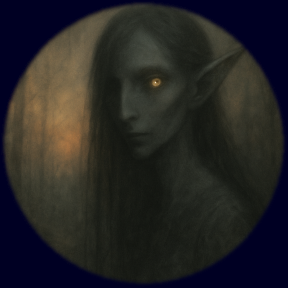
Easily the most recognizable race of ancient lore, Elves cannot so easily be defined or categorized. While they differ amongst themselves in complexion, power, and political alignment, one cannot gaze upon an Elf and glean its precise origins or identity from its physique alone. Light elves… Dark elves… Gloom elves… Do these names mean anything anymore? Each of the races has intermingled. What remains is an amorphous blend of beings now marveled more for their desirable beauty than the ancient secrets their highest still keep.
Dwarf
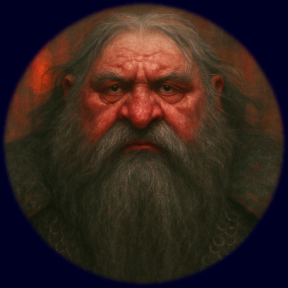
A hardy race of tough, no-nonsense builders, crafters, and fighters, the indomitable Dwarves, though traditionally thought arch nemeses of the Elves, are not so uncommonly seen in party with them. For, each race understood long ago, there are greater evils that threaten them both. Why quibble over petty historical differences when you’ll mutually assure destruction? It shouldn’t be assumed either all Dwarves live under mountaintops toiling the day away smelting stone. Each Dwarf is as unique and independent as anyone else.
Gnome
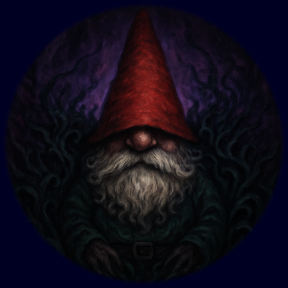
Somehow or another over the years, the original race of Gnomes was lost in the history books. People began to think they were something else entirely. To this day, real bonafide Gnomes keep the tradition: Pointy hats, puffy beards, and a peculiar difficulty seeing their eyes. Not all of them are like this, but it’s been seen a great deal can’t give up the pointy hats. We haven’t determined as of yet what all that’s about.
Ogre

Ogres are now most known for their centuries-old habit of living in grimy caves or forsaken cottages out in the gloomy woods, where they hatch up plots to kidnap farmers’ sheep and small children to cook up in big bubbling cauldrons. In reality, the truth isn’t so stereotypical. You see, many Ogres used to be like that. It’s true. Over time, like any other being, they evolved. Now, they aren’t only seasoned warriors and whacky wizards, one or two call themselves genuine kings and queens, or’ve ascended to heights that can be called the path of a worldly hero or villain. What isn’t of any debate about Ogres is that they’re by and large very fat – or in polite society terms, portly – specimens. Verily, so chunky and meaty they are, some’ve discovered this very trait can be used to strategic advantage. A word to the wise, then: Whatever you do, don’t call one fat.
Troll
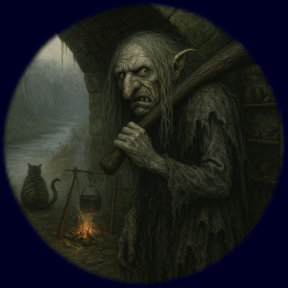
Trolls can be easily confused with Ogres, the two races being very similar in some ways. We don’t think the only difference is the lanky, oft-hunched physique of Trolls or their signature habit of living under bridges. Nay. What distinguishes a Troll from other races is foremost their insufferable penchant for playing pranks on passersby. When someone strays too close or unwisely feeds one, a Troll will almost invariably pop out of its hiding spot to scare them, or subject its mark to some tasteless joke. They’ve even been known to pretend to be someone else entirely, wearing a cunning disguise and strolling about town running amok.
Orc
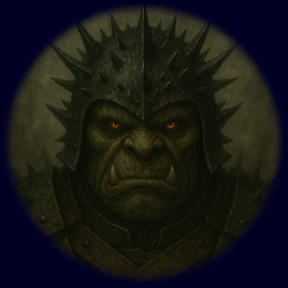
As one studies the races, one begins to wonder who came up with all these names and what the real differences between some of them are after all. If an Orc gets particularly fat and green and cooks up stolen sheep in a cave, is it now an Ogre? If it gets lanky and hunchbacked and lives under a slimy bridge, playing pranks on strangers, is it now a Troll? One could say there’s a physiological division of what constitutes a real Orc. Yet the lines get a little grayer the further along the spectrum of character one goes, until at last, there are some races without any clear definition at all.
Biomorph

Biomorphs assume animal shape, taking the form of mammals, reptiles, amphibians, birds, aquatic creatures, and others like these. They are not one single race per se but an expansive range of races we categorize under a single umbrella. As they’re all so very singular in their natures, we cannot say much of substance on them.
Human
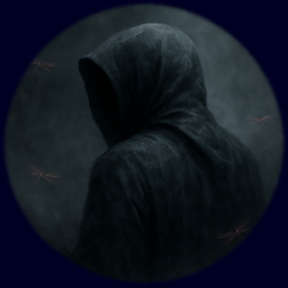
Now this is a race we find especially intriguing and amusing. Based on our research, the strangest and funniest habit of Humans is their widespread hatred for their own kind. Indeed, on any given day of the week, in any given part of the world, one will find someone or another despising their neighbor, or total strangers whose names and faces they know not. We do not find this defines Humans, though. Despite their timeless obsession with war and quibbling, they’ve a fierce and noble fighting spirit. Widely considered outsiders in Otherworld, we nonetheless welcome them to try their hand at one of the many schools and trades here, seeing if they might make a name for themselves.
Alien
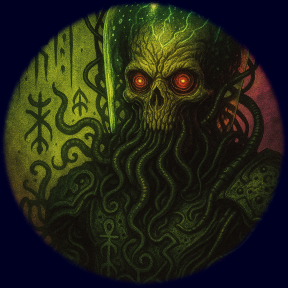
Sailing across the stars, select races of the Physiverse discovered how to tap the secrets of science. They build marvelous ships and devise marvelous inventions, zipping from system to system and learning, recently, to cross between dimensions. Thus we see a number of their Alien kinds in Otherworld, pursuing the ends they desire with the same fascination for our world we hold. One quality about them can’t be missed in your encounters. They all hail from species who’ve mastered technology and physics, and so tend to be very intelligent types. This ought not be mistaken for anything but brainpower though. Even the smartest creatures fall prey to fateful errors from time to time.
Angel

It turns out the old story about Angels and Demons isn’t all that accurate to the way things really work. See, there isn’t some neatly organized council of divine spirits watching over everyone, writing each soul on the nice and naughty list every year. In fact one would be hard-pressed to ever see a true Angel face to face at all. This does not mean they don’t exist. While true Angels are an extremely rare sight, beings who resemble them and their powers walk amongst us. They have visible or invisible halos, saving lives or ruining them if thought fitting. Like Elves and Dwarves, Angels and Demons aren’t eternal enemies. Some time ago, when, we aren’t sure, the highest Angels and their closest allies decided it was pure foolishness to cast all Demons out, refusing to ever speak to or bargain with them. Instead, the two now dance a delicate dance of good and evil, playing a game of cosmic chess beyond comprehension of most.
Daemon
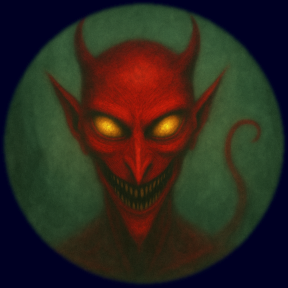
We shall not skirt around the discrepancy between the words Demon and Daemon. It is made known here when we use the term Demon, it refers to what we classify as a genuine Demonic. Daemon, in contrast, is a broader term that refers to entities that resemble Demons, but may or may not be true Demons. In Otherworld, a number of Daemons lay claim to their chosen class. Only some of them have horns. Many could be mistaken at a glance for another race. Their personas and alignments are equally as nebulous as any other.
Monster
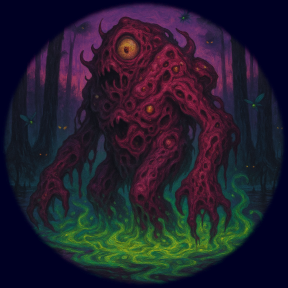
It is this word of all in language I find the most difficult to define and, simultaneously, most universal. Any being may be perceived as a Monster to any other being. Who decides which is and isn’t called one? By what standard do we divide the monstrous from the beautiful? And why is it so many of us find the monstrous so beautiful after all? Monsters in Otherworld include those well-studied creatures of folklore, as vampyres, werewolves, and swampfolk, and they include other species less common or known. Some Monsters, especially those who’ve mastered esoteric magics and sciences, exhibit phenotypes that blend and warp multiple species and subspecies together, creating chimera without name. While the word itself has developed a very negative connotation among commonfolk, here, it is used more-so as a categorical term than anything, distinguishing this assorted array of ghastlies from others not so ghastly.
Ghoul
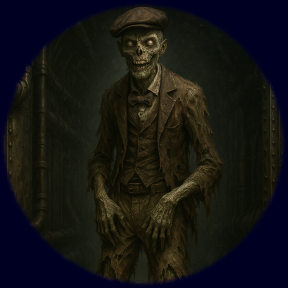
In the putrid mists of unsealed tombs and forgotten graves, far over the windy hills and down a winding meadow stream or two, one can see traces of the earliest Ghouls. These were, when first recorded in history, simple risen dead, reanimated from their coffins and roaming the earth in search of brains, or their lost memories. In other versions, they were corrupted constructs, whether controlled undead or pieces of death strung together by some mad scientist. It was remarked in our records, in one sorrowful account written long ago, one Ghoul found the ability to think and feel, and so carve its own destiny, or try. Now, Ghouls are as numbered as the living. They’ve developed their own societies and customs, defying blind hatred and disgust for their necrotic visages. Could it be another Ghoul will rise one day, one who thinks and feels a little deeper, and makes history? We will watch closely as always to see what comes to pass.
Ghost

Amidst the star worlds of the Physiverse, true Ghosts are a very infrequent and doubtful sight. Some people believe they don’t exist at all. What we call Ghosts here is a term closer to the word specter. These are, echoing Daemons, beings who resemble Ghosts but may not be true Ghosts themselves. Their skin is ethereal and ever moving. They seem themselves haunted by Ghosts of the past. Yet they suffer damage and feel emotions like anyone else here, and so can be killed all the same. It’s hard to say how much of their identity is only an aspect of appearance versus something more mysterious.
Lich
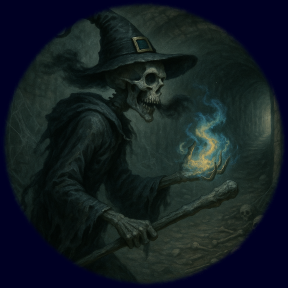
Once again we encounter an interesting question in the language of lore. A Lich, classically defined as a living intelligent skeleton or undead, may be called or confused with a Ghoul. In our terms, they are not the same. A Lich is specifically an animated skeleton, rather than any other kind of undead or revenant. Liches almost always retain an obsession with death – and their previous life – in undeath. Some turn themselves into Liches by necromantic rituals. In more than one case, we’ve recorded Liches driven to avenge their deaths or haunt those who wronged them. They may control lesser skeletons or other spookies. Some are very powerful. It must not be forgotten by those interested in combat schools brittle-looking bones don’t mean weakness.
Fairy

If there is one race that can be said the arch nemeses of Demons, it is the Fae. In every single record in our archives – save those times they were corrupted by the Demons they loathe – the enigmatic and superbly stubborn Fairies made every possible effort to rid of the Demon scourge who harrowed their homes. Now, this does not mean new Fairies will be like them. It’s just, we must distinguish between historical Fae, and those who join Otherworld with a desire to appear like them. Fairies are far more than tiny magical misfits with sparkling wings and an affinity for mushrooms. Individually quite fragile, when organized, they’ve seeded the demise of entire empires. How they do this, and why, is not something we can disclose here.
Droid

Droids are robotic beings who’re comprised mostly or solely of technology. They can be sentient, but there are also insentient Droids. How, then, does one tell the difference between them? One would think it would be as simple as a speech test, seeing which of them fails to appear to be alive and intelligent. Yet, as technology advanced as it inevitably does, it was quickly found near impossible to tell the difference at all. Now, we find it pointless to call them living or unliving, especially in light of the unsolved debate of consciousness itself. What strikes us as odder is the longing some of flesh feel to become someone made of metal.
Goblin
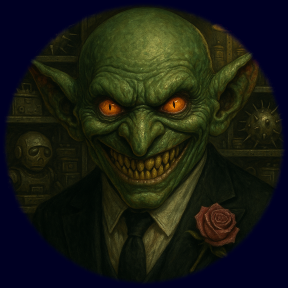
There is one thing and one thing only Goblins care about: gold. Well, that’s what they’ve been obsessed with for a long time anyhow. At some point in Goblin history, a handful of them decided they were fed up with the whole gold thing and decided to invest in silver instead. When this went tits up, they converted to bronze, and then eventually to small bills with indistinguishable faces and meanings. Aside from their legendary love of money, Goblins are widely known for their exceptional and explosive expertise in engineering. In particular, they tend to specialize in making bombs, bazookas, and other flammable devices they sell to the highest bidder. While their engineering has become notoriously unreliable and dangerous, leading to the death of more than one poor sucker who thought they knew how to operate a Gizmotic Googopper 3000, some clientele see the value in using their whacky tech anyway, keeping their hands off it whenever possible.
Aberrations

Common races are not the only beings we know of. There exist many, many others, most of which can only be known by direct experience. For those among the common races who seek evolutions beyond their familiar frames, they may study Aberrations who fall into classifications all their own. Long, arduous quests lead the skilled and knowledgeable to magics and mysteries granting the wisdom to know how to shift one’s shape, and thus become something stranger.
Shinigami

Traditionally called death gods, Shinigami have long diverted from their origins as supposed sentinels of dying souls in the afterlife. They can now more specifically be understood as death spirits, beings who all share a common association with the powers and planes of death, and act from its cryptic eclipse. I can tell you from experience one does not simply “become a Shinigami” as though it’s as easy as winning a local game of bingo. It is a very, very painful odyssey, extremely unique to each soul and demanding the utmost discipline to face death in the eyes and know – not believe – know there is life, or something like it, on the other side. When you’ve died and died again, and been reborn each night, grasping night itself by the hand to see where it takes you, then you’ll understand.
Anomaly

When life grows so weird and far-flung from its humble beginnings in the evolutionary fold of spacetime, and minds dream and evolve in the cosmic clocks that tick eternity away, after enough moons have passed, organisms without any clear classification, source, or precise nature spawn. They may linger for a time and disappear, like the fading hypnagogs of sleep. Others persist, clinging to their newfound life in the circus of the cosmos to see what else they might become. Do you consider yourself an Anomaly? Perhaps you too will one day see further what it’s like to exchange your skin for another, donning a magic dripping with secret life.
Golem
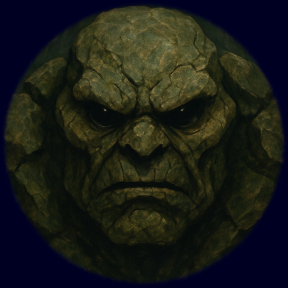
In the old days of witchcraft, warlocks learned how to tap the dormant essence of earthen materials, shaping them into animated constructs to serve their will. These, we call Golem. Hulking giants made of clay, earth, and stone, they are as hardy and tough as they are mean. It’s true. One would be hard-pressed to find a Golem who’s nice and simply tells you hello when you meet it. It’s something about the way they are, the substance they’re comprised of, and what it does to a spirit to be forever trapped in a body made of earth.
Psikomorph
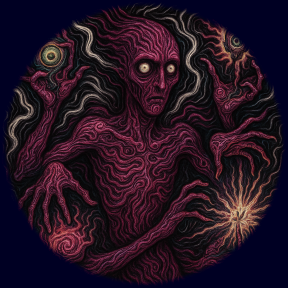
When you fall ever so silent, letting the day’s drama and meaningless static fade away like so much dandelion dust, and the enchanted energy of the musical trance courses through your veins, the sky always setting slowly even as it rises, you can feel a chill, sparkling invisibly across your skin and showing you something I can’t. Dreaming under forgotten moons in a direction no one can pinpoint, the icy spell that is trance reminds, over and over, flesh is an illusion. What happens when you forget you’re asleep, but possess all the powers you do when you’re lucid? There’s a name for it.